

PROCESS · DOCUMENT KNOWLEDGE
Information extraction
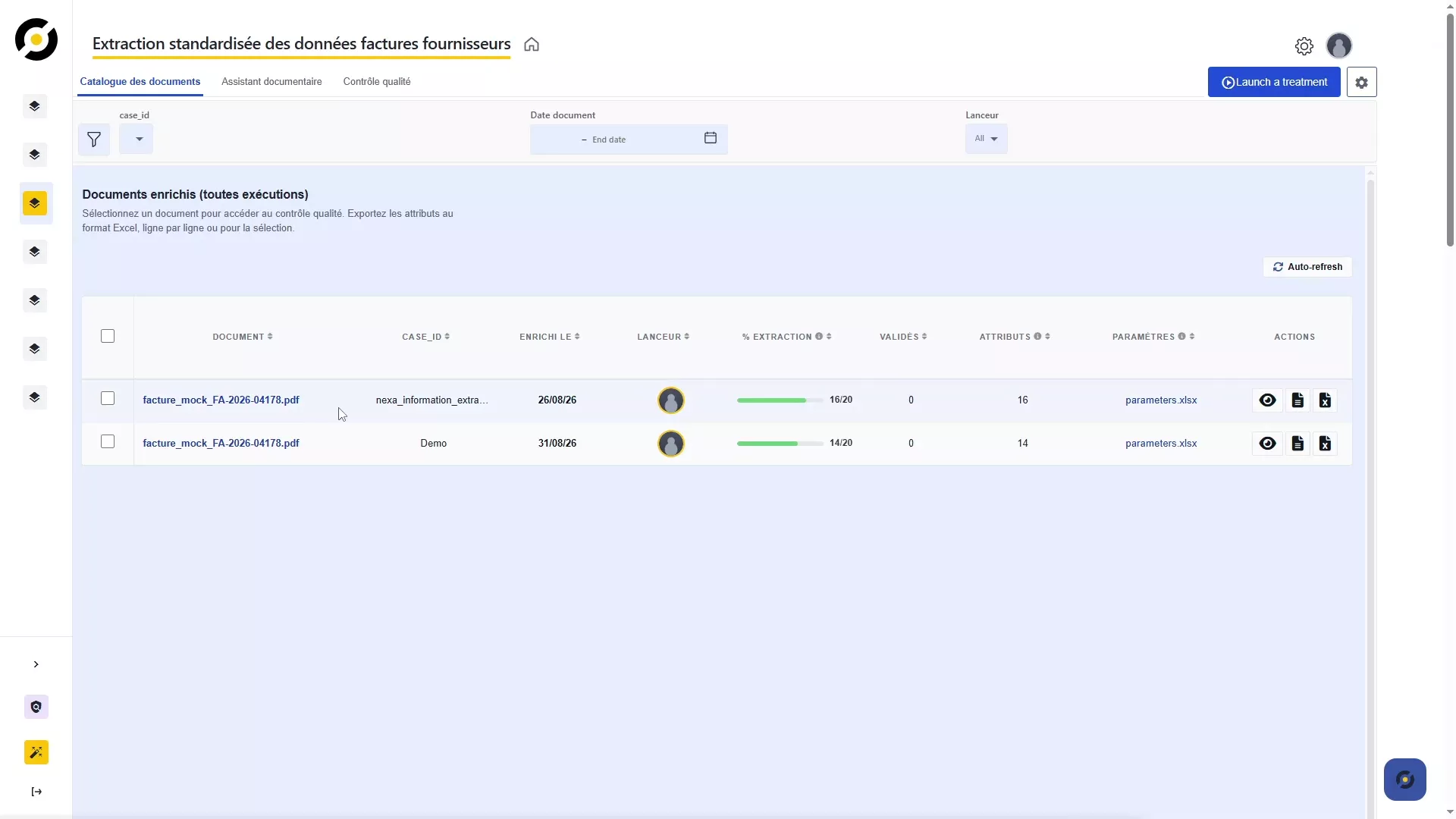
From raw corpus to usable information: extraction, structuring, and a systematic link to the origin passage.
The NEXA impact
830
files processed, over 11,000 pages
10,000 / 11,000
nodes and relations extracted
80%
precision, hallucination close to zero
Information extraction turns corpora nobody can read in full into structured, queryable data. Every extracted fact stays linked to its origin page : verifiable in one click, defensible in audit.
Published indicators are orders of magnitude measured in client context, not contractual guarantees. Every figure was cleared by the client concerned before going live.
Capabilities
Volume on the left, order on the right
Thousands of heterogeneous pages become a queryable structure: entities, relations, attributes. The platform carries the reading; judgement stays with the experts.
Every fact points to its source
An extracted fact without a reference has no value in a controlled environment. Every element carries the link to the exact passage that justifies it, viewable without leaving the screen.
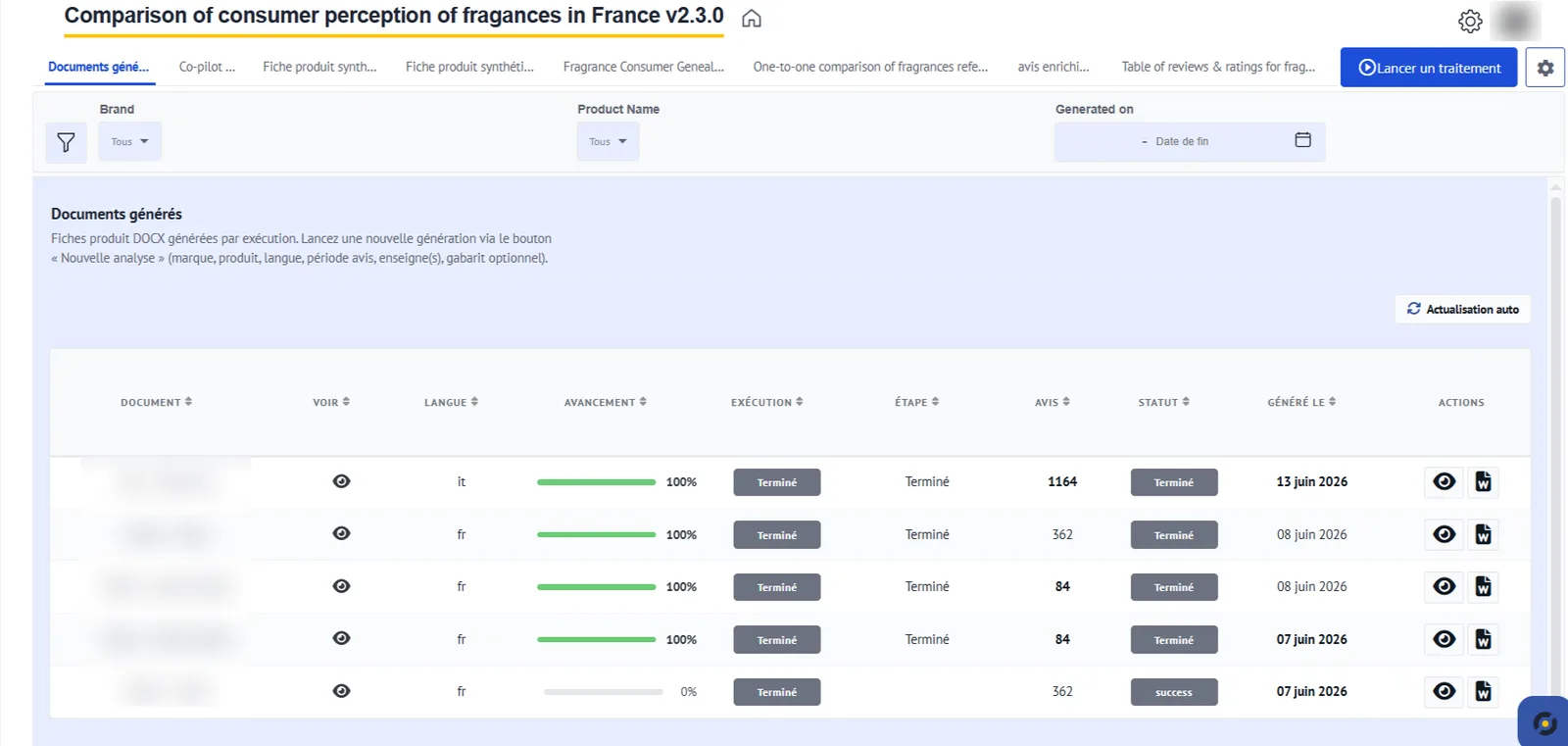
End-to-end lineage
From source to result, transformations are traced. An auditor walks the chain back without manual reconstruction.
Vue lineage : de la source au résultat, transformations comprises
The check before restitution
The AI judge scores each extraction’s substantiation before an expert sees it. Weak extractions are sorted to the top of review, not discovered in production.
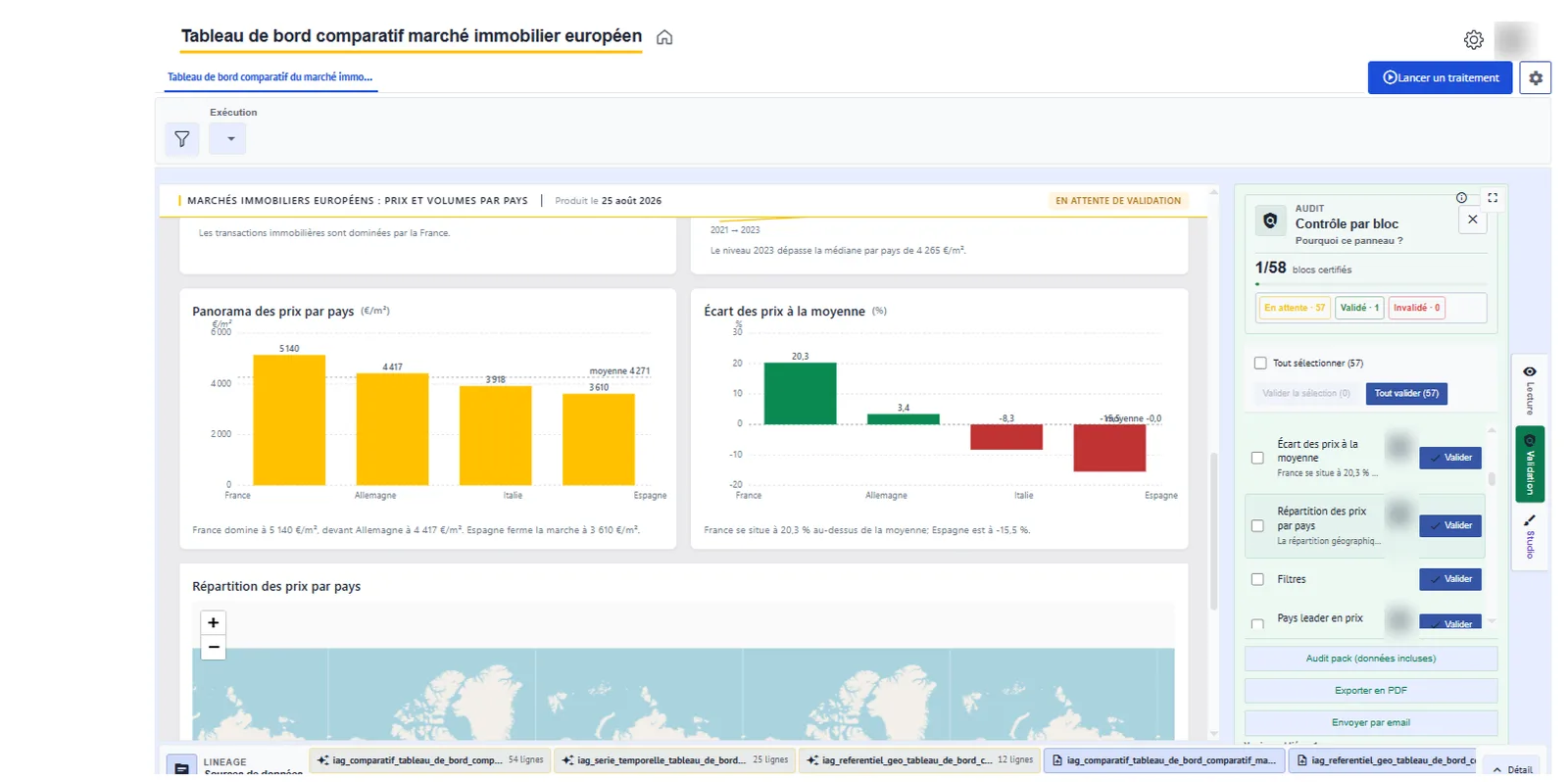
One family in a structured portfolio.
How the process unfolds
Six steps, six evidence artefacts. That is what separates a critical process from text generation.
Ingestion & context
Sources selected, access scope applied, personal data detected before execution.
Generation
The engine produces a proposal. Every assertion is linked to its source.
Automated check
The AI judge scores compliance, consistency and substantiation, block by block.
Expert validation
Draft → Reviewed → Approved. Three separate roles: operator, reviewer, approver.
Governed feedback
The expert’s feedback is typed, attributed, versioned and replayed on the next process.
Capitalisation
The validated pattern serves the next process, which starts faster and costs less.
Users and data
- Users
- Risk analysts, lawyers, procurement teams, strategy teams
- Validators
- Process owner, domain expert
- Data mobilised
- Internal and external corpora, files, contracts, reports
- Integrations
- IT connectors, warehouses, structured export
Controls and guardrails
- Substantiation threshold configurable per process
- Validation disabled when evidence is insufficient
- Personal-data detection before execution
- Column contract enforced: any gap is rejected
- Runs replayable on an auditor’s request
- Audit Pack exportable over the chosen period
The trace this process leaves
Transparence
The trace this process leaves
Run Receipt, Evidence Panel in the interface, exportable Audit Pack and replay on demand.
See the evidence chain →Gouvernance
What this process consumes and returns
Cost per run, tokens, CO₂ footprint, number of uses, acceptance rate and ROI configured by the process owner.
See the Cockpit →Simulateur ROI
What a process estate costs, and returns
Compare the three paths on your volumes, then simulate what a process returns: break-even, kinds of value, Cost per Run.
Open the simulator →Put this process into production.
A demo on your own documents, not on a demo dataset.