Skip to content

Pillar 03 · Audit Pack

You know what was executed, checked, validated and corrected.

Auditability is not bolted on afterwards. Every execution produces evidence as it happens, aligned with DORA and the AI Act.

AI judge

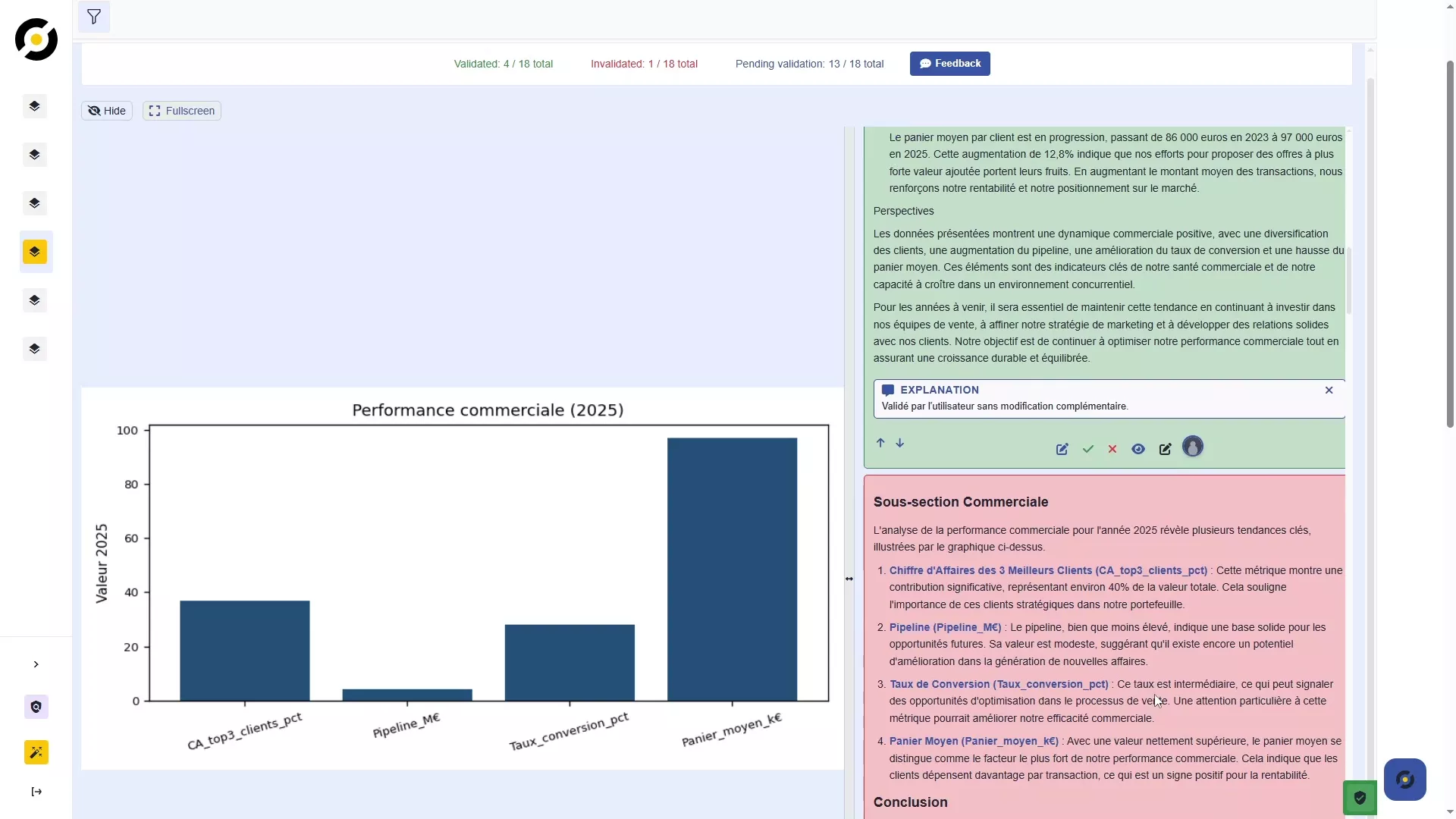
Every block is scored before an expert opens it. Review starts where the risk is.
Execution, block-by-block scoring, automatic sorting of blocks to review first

Human in the loop

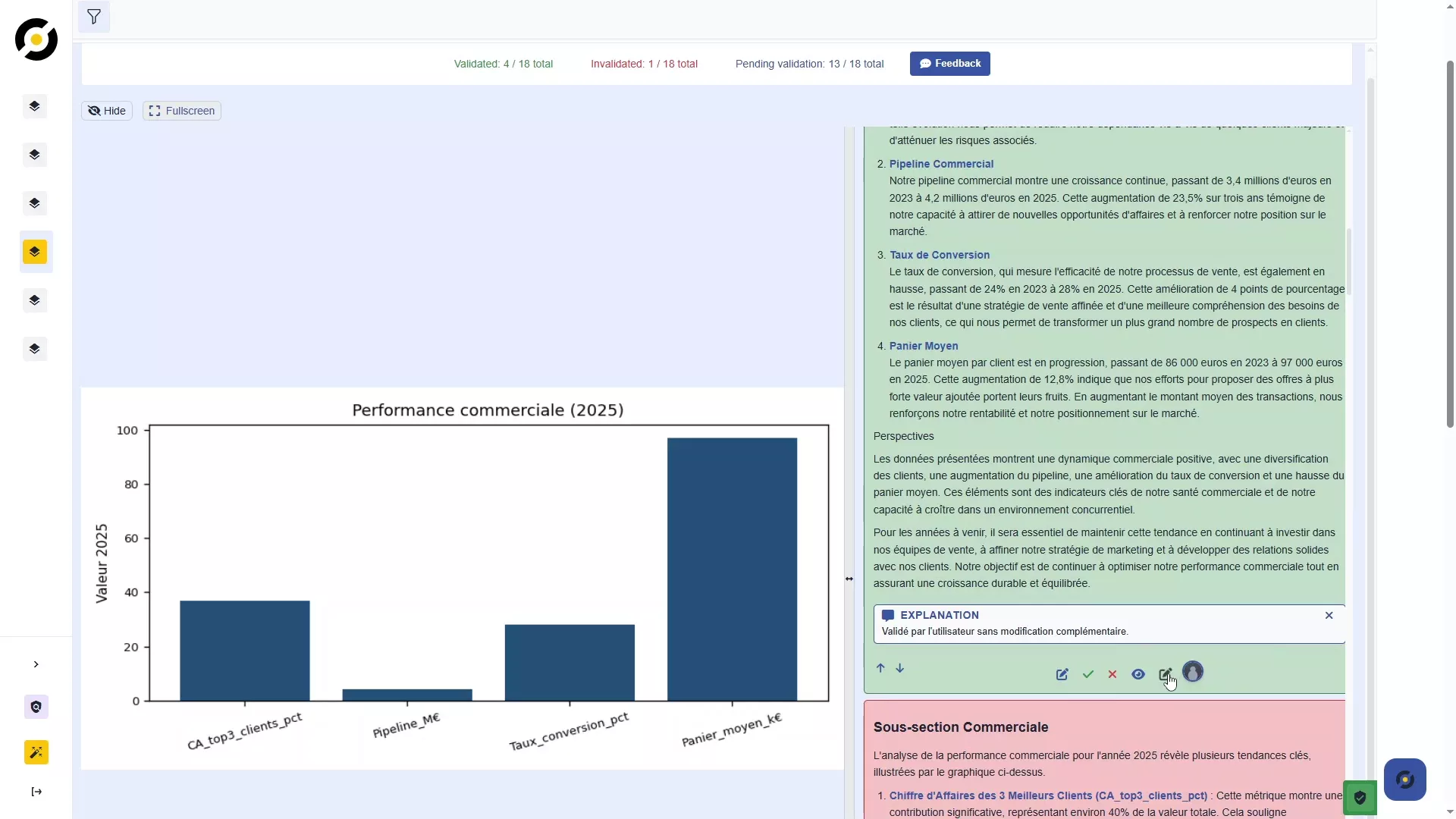
Draft, reviewed, approved: three identities, never a global click. No evidence, no approval.
Block-by-block validation: certified block counter, statuses, Validate button
Validate block by block — never the whole document at once.

Governed feedback

Feedback is not a comment. It is typed, owned, replayed. The next process starts higher.
Correcting a block, typing the feedback, entry into certified memory, reuse on the next run

Audit Pack

One archive. One period. One scope. An auditor replays — the delta shows.

Selecting the period, exporting the Audit Pack, replaying a run side by side

Evidence is built at every stage.

Algorithmic value chain — six steps, six artifacts Horizontal six-step chain: ingestion and context, sourced generation, automated check, HITL validation, governed feedback, capitalisation. Under each step, the artifact it produces: versioned input log, answer and citations, confidence score per block, identity and timestamp per block, certified decision versioned, acceptance rate up and cost per run down. A gold bracket underlines the artifact row. THE ALGORITHMIC VALUE CHAIN 1 INGESTION & CONTEXT 2 SOURCED GENERATION 3 AUTOMATED CHECK 4 HITL VALIDATION 5 GOVERNED FEEDBACK 6 CAPITALISATION INPUT LOG VERSIONED ANSWER + CITATIONS CONFIDENCE SCORE PER BLOCK IDENTITY + TIMESTAMP PER BLOCK CERTIFIED DECISION VERSIONED ACCEPTANCE RATE ↑ COST PER RUN ↓ SIX STEPS · SIX ARTIFACTS
HITL validation — draft, reviewed, approved, and the evidence lock Three validation states as three cards: draft held by the operator, reviewed by the reviewer, approved by the approver — each with an identity and a timestamp. The transition from reviewed to approved stops on a gold diamond: when evidence is insufficient, validation is disabled. HITL VALIDATION · THREE SEPARATE ROLES DRAFT ROLE: OPERATOR IDENTITY TIMESTAMP 09:41:07 REVIEWED ROLE: REVIEWER IDENTITY TIMESTAMP 10:12:44 INSUFFICIENT EVIDENCE VALIDATION DISABLED APPROVED ROLE: APPROVER IDENTITY TIMESTAMP 10:58:03 EVERY VALIDATION CARRIES AN IDENTITY AND A TIMESTAMP

Three objects, three questions.

Many platforms call a log screen “traceability”. Here, three distinct objects answer three different questions.

Three proof objects, never confused Three columns issued from a single run. The Run Receipt, a vertical ticket listing models, prompts, sources, cost and time, answers “with what, how, and under which conditions was this result produced?”. The Evidence Panel, listing every block with its score and status, answers “is this deliverable sufficiently substantiated to be used?”. The Audit Pack, exportable as a ZIP containing manifest, validations, events.jsonl, lineage.json and data, answers “why is this result justified, acceptable and compliant?”. ONE RUN RUN MODELS 2 PROMPTS V7 SOURCES 14 COST €0.42 TIME 03:12 TIMESTAMPED BLOCK · SCORE · STATUS MANIFEST VALIDATIONS EVENTS.JSONL LINEAGE.JSON DATA ZIP AVAILABLE · ALL BLOCKS VALIDATED Run Receipt Evidence Panel Audit Pack “With what, how, and under which conditions was this result produced?” “Is this deliverable sufficiently substantiated to be used?” “Why is this result justified, acceptable and compliant?” PROOF OF PRODUCTION · VERSIONED VISIBLE JUSTIFICATION · BUSINESS FLOW FORMAL JUSTIFICATION · EXPORTABLE

Run Receipt

Run Receipt

With what, how and under which conditions was this result produced?

Models, versions, prompts, parameters, sources, rules, checks, identities, timestamp, cost and duration.

Proof of fabrication

Evidence Panel

Evidence Panel

Is this deliverable substantiated enough to be used?

Inside the business flow: cited sources, viewable excerpts, score per assertion, validator identity.

Proof of visible justification

Audit Pack

Audit Pack

Why is this result justified, acceptable and compliant?

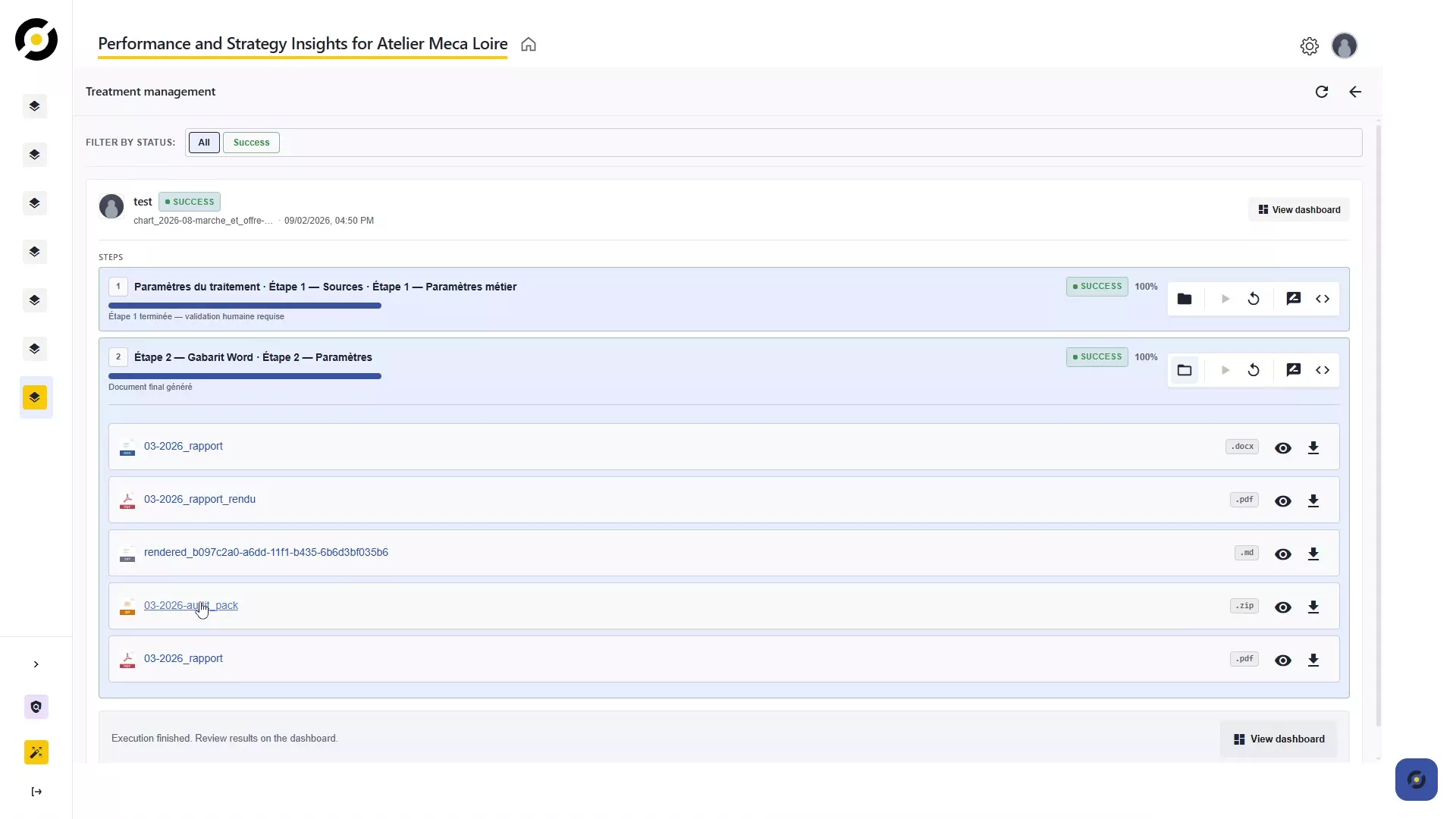
Exportable archive: inputs, prompts, responses, validations, algorithm versions, applied policies.

Proof of formal justification

Product visual coming soon

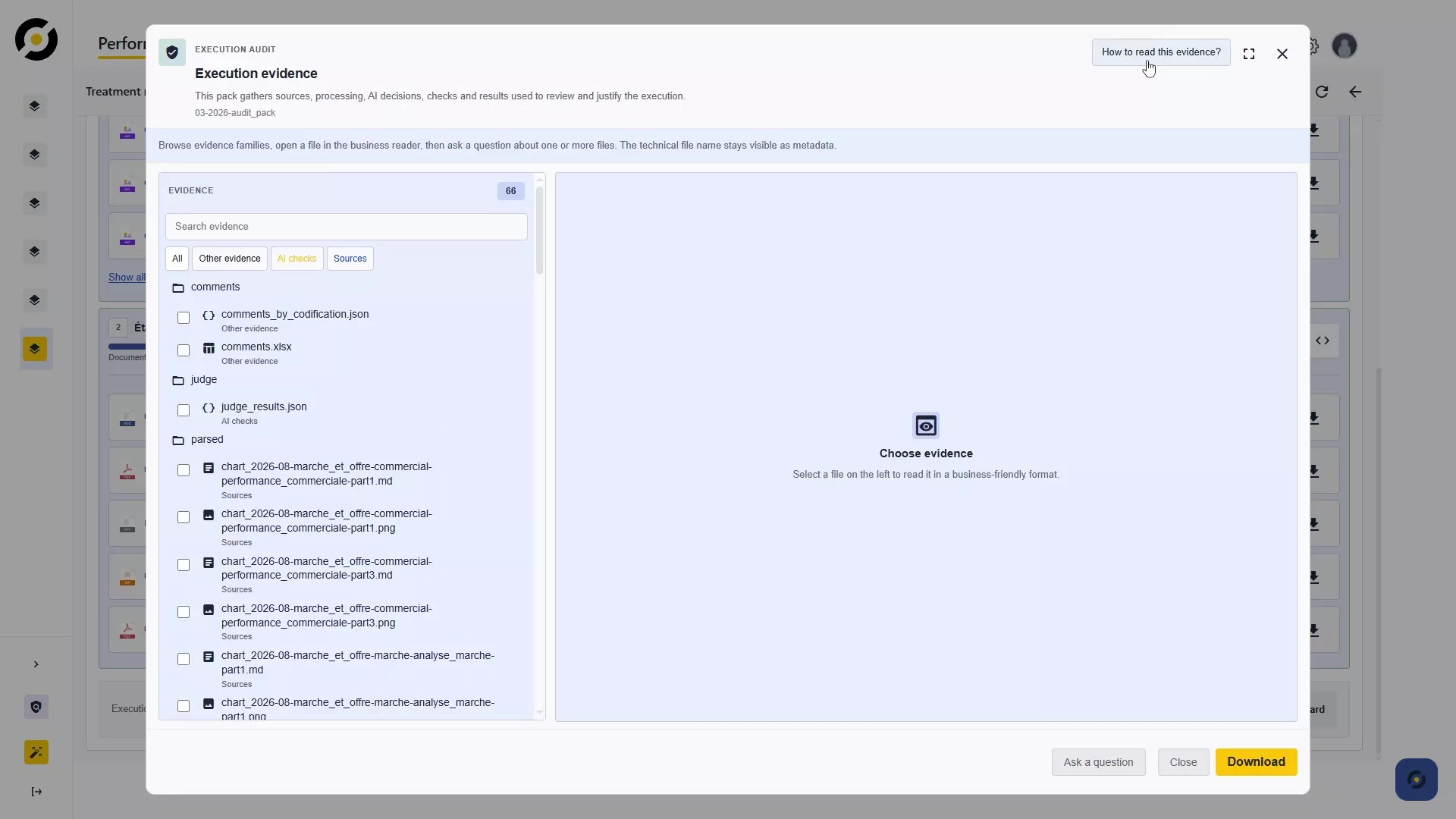
Audit Pack contents: a 65-file archive opened on the judge results

Artefacts that document requirements.

The platform produces the elements required for audit. It does not, on its own, guarantee regulatory compliance.

EU AI Act — obligations and produced artifacts Correspondence table. On the left, five EU AI Act obligations: technical documentation (art. 11), record-keeping (art. 12), transparency (art. 13), human oversight (art. 14), accuracy and robustness (art. 15). On the right, the artifacts produced by the platform: Run Receipt, append-only event log, Evidence Panel, HITL validation with identity and timestamp, run replay with identical parameters. The artifacts gather into the Audit Pack exportable as ZIP. A gold banner states: produced artifacts, not a compliance guarantee. OBLIGATIONS — EU AI ACT ARTIFACTS PRODUCED BY THE PLATFORM TECHNICAL DOCUMENTATION EU AI ACT · ART. 11 RECORD-KEEPING EU AI ACT · ART. 12 TRANSPARENCY EU AI ACT · ART. 13 HUMAN OVERSIGHT EU AI ACT · ART. 14 ACCURACY & ROBUSTNESS EU AI ACT · ART. 15 RUN RECEIPT MODELS · PROMPTS · SOURCES · PARAMETERS EVENT LOG EVENTS.JSONL · APPEND-ONLY EVIDENCE PANEL SOURCES AND SCORES VISIBLE PER BLOCK HITL VALIDATION IDENTITY + TIMESTAMP PER BLOCK RUN REPLAY SAME PARAMETERS · DELTA DISPLAYED AUDIT PACK THESE ARTIFACTS, EXPORTABLE AS ZIP PRODUCED ARTIFACTS · NOT A COMPLIANCE GUARANTEE

Ready to industrialize your decisions?

The AI that holds up in audit.